Posted on

First Aid Kits for Winter Sports

Hiking in the snow

First Aid Kits for Winter Sports

With the winter in full force across Canada it is important to know how to stay safe when you’re having fun this season!

Mountain Sports: Skiing, Snowboarding, Snowmobiling

When heading up the mountain whether it be for a day trip or a leisurely stay it is important to bring a long safety supplies to prepare yourself for an emergency. First Aid Canada recommends smaller kits, which can be carried on person such as our Adventure Kit or Belt Pack Kit. These kits are designed to treat minor injuries occurring in an outdoor setting. WoundSealBzK wipes and bandages are a few of the items tightly packing into this kit for optimal minor injury treatment in an outdoor setting.

Hockey/Ice Skating

Hockey is Canada’s favourite sport! Whether you’re on a team or playing recreationally it is important to take the necessary precautions when participating on a surface like ice as it can be very dangerous. There are exclusive kits available from First Aid Canada for hockey teams, such as the Hockey Coach/Trainer Kit. If you are playing recreationally on a pond or ice skating for fun on local outdoor rinks you may want to consider an Adventure or Hikers’ Kit.

Ice Fishing

Ice fishing is one of Canadian’s favourite pastimes, however it can be extremely dangerous! Along with making sure you never trust the ice (always be aware of the thickness and quality) you should always arrive prepared. This means taking along a quality first aid kit such as a Wilderness Kit  or an Emergency Survival Kit and extra supplies such as wool blankets which are available in 30% Wool and 50% Wool.

May you have the most enjoyable winter season!

Life is Precious. Be Prepared.

Posted on

Tips for Keeping Your Home Safe for the Holidays

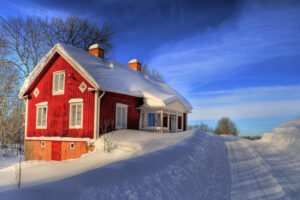
Red House in Snow

Tips for Keeping Your Home Safe for the Holidays

With the winter season just around the corner it is important to think ahead and be prepared for what the cold weather entails… 

In addition to Winter Road Safety, the First Aid Canada team feels in is important to address safety within the home. While family and friends frequent the house more during the holidays it is important to be prepared with an adequate first aid kit and possibly an automated external defibrillator.

Whether it be Dad burning himself trying to help Mom out on the stove or stubbing a toe playing house hockey with cousins an adequate first aid kit can mean the difference between treating injuries at home vs. visiting the emergency room.

First Aid Kits & Supplies 

First Aid Canada is pleased to offer two different first aid kits designed especially for the home: 

  • Home Kit – Deluxe
    Containing essential items, plus more so you won’t need to replenish as often

If you are lucky enough to spend the holidays at the cottage, we also have kits suited especially for those spaces as well:

It may also come in useful to consider the following items: 

Automated External Defibrillators 

Automated External Defibrillators or AEDs are life-saving devices that are used to restart the heart when facing sudden cardiac arrest (SCA). SCA can occur at anytime and any age and a defibrillator close by can mean the difference between life and death. Keep your loved ones safe this season and in the home or cottage by considering a Philips HeartStart AED for the home. First Aid Canada offers a comprehensive AED home package containing:

  • Philips HeartStart Home Defibrillator with 8-Year Warranty
  • Pre-Installed Battery (4 Years or 200 Shocks) with 4-Year Warranty
  • Pre-Installed Adult SMART Pads Cartridge
  • Slim Carry Case
  • AED Fast Response Kit (Includes: CPR Face Mask, Paramedic Scissors, Pair of Nitrile Gloves, Razor & Absorbent Cloth)
  • Owners Manual and Quick Reference Guide
  • Training Video
  • Window Decal & Call 9-1-1 Reminder

Don’t delay on being prepared for the holiday season! The First Aid Canada team is always here to answer questions: 1-855-322-4243. 

Life is Precious. Be Prepared.

Posted on

What You Should Know About Snow Shoveling and Sudden Cardiac Arrest

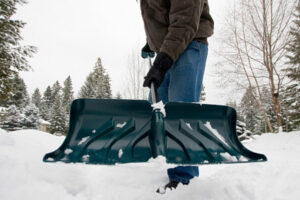
Man shoveling snow at risk of sudden cardiac arrest

There are an unsettling number of people who are rushed to the hospital with chest pain after shovelling their driveways, many of them have had a heart attack.

Although a heart attack IS an excellent excuse to get out of clearing your driveway of snow…that is not why people are getting them! The bottom line comes down to risk of cardiovascular disease (such as high blood pressure or cholesterol), and not regularly exercising.

If it’s been a while since you’ve exercised, it is best that when you do start back up, to take it slow. If someone who has not exercised in a long while wanted to get back into exercising by running a marathon, it’s just not realistic and down-right dangerous. You must work your body up to a point where it can HANDLE the 52km run. If your body isn’t ready, you will get hurt.

The true is same for shovelling snow. Shovelling snow is very intense exercise. Just think, you go to the gym to lift WEIGHT. When you shovel, you are lifting weight. Pushing and lifting, and throwing….over and over again. And the heavier the snow, the harder it is. Shovelling your driveway after a heavy snow fall is like going to the gym and working out hard for an hour or so.

This isn’t a recommendation to not shovel…on the contrary, this is a message to start exercising! The snow will fall this winter, and you will have to shovel it…you can decrease your risk of heart attack during your shovelling by exercising regularly.

But what should you do when you are shovelling and you feel chest pain?

Recognize the Signs.

Not everyone experiences a heart attack the same, you may not feel the “typical” symptoms.

  • Pain or pressure in the chest
  • Pain in your jaw
  • Nausea (like you need to vomit)
  • Pain shooting down your arm
  • Overall feeling of being unwell

 If you feel any of these, stop what you are doing, and CALL 911.

How can you prevent a heart attack during snow shovelling?

Before You Shovel…

  • Talk to your doctor before the snow starts falling
  • Avoid shoveling right after you wake up as most heart attacks occur early in the morning when blood is more prone to clotting
  • Do not eat a heavy meal before shoveling
  • Warm up before starting by walking, marching in place and/or doing light stretching
  • Do not drink coffee or smoke at least one hour before. These elevate your blood pressure and heart rate

While You Shovel…

  • Try to shovel when the snow is light and powdery
  • Use a smaller shovel…it’s lighter when you lift
  • Wear light, layered, water-repellent clothing provides both ventilation and insulation. It is also important to wear a hat, as well as mittens or gloves and thick, warm socks
  • Avoid falls by wearing shoes or boots that have slip-resistant soles
  • Take regular breaks, you don’t have to finish the entire driveway in one go
  • Drink lots of water to prevent dehydration
  • If you feel pressure, pain or tightness in your chest, or discomfort spreading to your shoulders, neck, jaw, arms, or back, call 911 immediately

And if you are in doubt, or have already suffered a heart attack…just hire someone to do the driveway for you. You can always watch from the window as you drink some hot cocoa.

Posted on

Great Canadian Tips for Staying Safe in the Winter

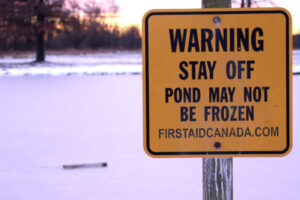
Warning Sign Beside Frozen PondWinter in Canada is a special season. We pride ourselves on our snowy, long and ‘Canadian’ winter season. There are some reasons to be bitter (excuse the pun), but others reasons to rejoice. Skiing, snowboarding, ice skating and tobogganing are some of the most fun you can have in a winter wonderland.

But without protection from the cold temperatures in the form of a winter coat, hat, gloves and boots, our bodies would not function properly, and could be permanently damaged after extended exposure to the elements. Here we discuss some common, and potentially life threatening cold related injuries.

HYPOTHERMIA

  • Hypothermia occurs when you have an abnormally low core body temperature
  • Normal body temperature is around 37°C (98.6°F)
  • Hypothermia is defined as a drop in body temperature below 35°C (95°F)
  • When the body becomes extremely cold, all physiological systems begin to slow down – eventually to the point that threatens survival

FROSTBITE

  • Frostbite occurs when a part of the body actually freeze
  • Mild frostbite doesn’t leave lasting damage, but severe frostbite does cause permanent damage and may even require amputation of a body part

 DID YOU KNOW?

  • In some rare cases, hypothermia can save lives. There are cases where children who have fallen into freezing water were successfully revived even when there was no heartbeat. Their below-normal temperature slowed down their brain function and caused their bodies to use less oxygen
  • Smokers and people with diabetes and other circulatory problems have a higher risk of developing frostbite

CAUSES

  • Although mainly associated with cold weather, hypothermia can also strike when it is relatively warm, especially in damp, windy and raining conditions
  • Hypothermia is also common in drowning victims due to cold water causing rapid decreases in body temperature; all lakes, streams, rivers and oceans in Canada, during any season, can be considered “cold” – cold enough to trigger hypothermia
  • Not dressing appropriately for the cold weather/the activity you are doing
  • Falling through ice
  • Frostbite generally starts with exposed skin on the tips of the nose, ears, cheeks and fingers but it can creep into the toes, feet, hands and face as a person remains exposed to the cold

PREVENTION

  • Dress appropriately for the weather/activity you are doing
  • Wear a hat, gloves, warm socks, boots and a warm winter coat
  • Stay safe using the “buddy system” to check on one another
  • Stay dry
  • Eat high energy food (eg. Nuts, dried fruit)
  • Drink plenty of non-caffeinated, alcohol-free liquids
  • Keep your body moving to create heat
  • If you believe someone may be suffering from frostbite, be mindful for little white spots on the face (check every 10 to 15 minutes)
  • Also, pay attention to how your feet (or other susceptible body parts) are feeling
  • If you are unsure of the thickness of the ice, STAY OFF THE LAKE!